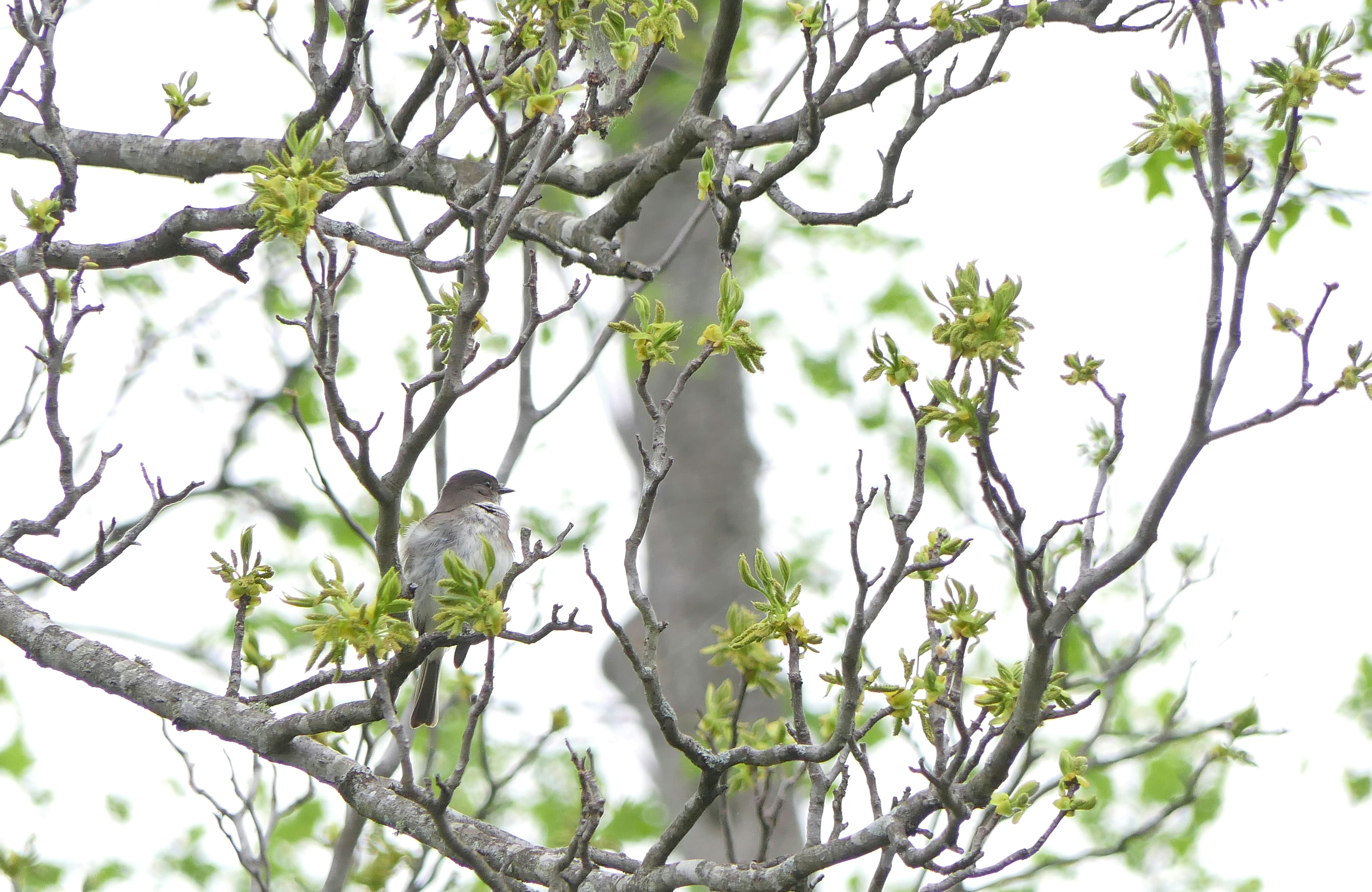
The sky is gray and the trees are budding green. The tiny leaves pop against the dark sky, bravely unfurling as they return to the familiar way of becoming again. Nature seems to say, I’m ready for what’s coming next. And perhaps I am too.
I’ve been reminded about the myth of arrival this week and new guides are instead offering the truth that with every new answer, comes new questions to live into. As I continue to grow, this answering of questions offers an invitation. How can I unfurl, just like the trees, against dark skies, with an inner knowing? I’ve done this before – the world has changed in the off season, and still there’s a power within me, trusting DNA and a swirl of interests, passions, and opportunities for what this season is calling for next. Sure, it’s trite to say the journey is the destination, and in all of these mixed metaphors lies the possibility that perhaps I don’t have to work so hard.
Perhaps my body and my heart already know what to do. It’s my mind that gets in the way.
The man next to me at the coffee shop is chuckling as he listens to a podcast, ear buds tucked in tight. I look around and watch us all immersed in our screens and our keyboards, eyes down so we don’t have to look at one another, I think about the way we come together, just to be alone. We consume, we scroll, we create, we connect. We sip and we stumble and we stutter, finding ways to either get louder or drown out the noise. What if we didn’t have to work so hard?
And this week, I want to instead rest in a different way of being. The leaves know what to do. They just unfurl, emerging into a world that has already changed. Unfurling alongside others. A beautiful thing.
On a rare afternoon not sprinkled with rain, I found myself walking the loop behind our small office. As I circled south back towards an afternoon of meetings, I heard a woman and a companion cycling behind me.
“Keep pedaling”, the woman encouraged on repeat. “You’re almost to the top of the hill. You need the momentum to get to the top.”
I walked, they pedaled, and I kept my face forward, anticipating a small child to pass me before I reached my office again.
Instead, I heard the woman again, saying, “Keep pedaling, you’re almost there!”
As I crested the small hill, my feet hitting grass instead of pavement, I turned, expecting a little boy to be within reach. Instead, a young man with different challenges was pausing on a trike to catch his breath.
I smiled at the caregiver, and turned again to finish my loop. I was surprised by the story I was creating behind me. Something I imagined was entirely different, and in the difference was delight.
We all need encouragement as we pedal up our hills. We all need tools designed to help us succeed. And we all need someone guiding us, reminding us that one more pedal, one more push, can help us get to the top.
This year has been one of transformation. I’m seeing things in ways I hadn’t before. Motherhood has given me a new perspective on the ways our world expects us to operate. I care less about outcomes and more about the journey.
I’m now passionate about the pace at which we move and the space where we allow ourselves time to pull of the trail and catch our breath. I care more about the types of encouragement we give and the unique ways we learn to ride the bike than what’s at the top of the hill.
In my learning, I’ve also been privileged to go through a transformational coaching program and I graduate at the end of June. If you’re looking for a new partner to join you in whatever transition is bringing you, let’s have a conversation.
I can remind you to keep pedaling, and that what you strive for at the top of the hill is important, but how you travel, and when you pause to take a breath is just as nurturing.
Getting on the bike is the brave thing. Welcoming encouragement from others; just as beautiful. And a mid-day afternoon reminder that it’s how you travel, rather than where you end up, beautiful too.
I had taken a seat in the plastic-moulded chair, waiting for the meeting to begin. In the center of a room was a circular table covered in grey. In the center of a circle, a candle burned, again surrounded in a small circle of smooth river rocks. Whether they were collected from nearby stream beds, or manufactured and sold on the shelves of craft stores, I was unsure. I simply noticed their existence.
‘Welcome to bereavement for beginners’, the young facilitator said, jumping me out of my wondering.
Curious how the passing of time morphs a memory. I can’t recall the exact name of the support group. I do remember how shocking it felt to belong to a group of people titled ‘bereaved’.
After introductions, and open sharing, we were led through an exercise. I followed directions having been told to choose a small river rock of my own. We were to create a totem of support for when emotions felt too large. I selected my stone and, using a white paint pen, wrote the word hope across its surface. I circled the word and tucked the rock in my pocket. When I left the class, I sat in the parking lot and sobbed.
I left the stone in the center console of my car for years. It’s collected dust and become friends with pens lacking ink and a melted chapstick or two. Its presence serves as a reminder to generate hope as I’ve driven from place to place, moving further away from my early days of grief.
This week, I started a Grief Educator Certificate program with David Kessler. In the first teaching I learned a new label for my bereaved status. He says the term for the grief we experience after the two year mark is ‘mature grief’. I snickered to myself when I heard that name.
Mature? Grief? Wasn’t mature something to aspire to as a young child?
Mature people have it all together. They have arrived. Even the dictionary uses the auspicious claim of being ‘fully developed.’ My grief does not feel complete.
My grief has, however, become a source of motivation to seek wisdom and share what I’ve learned. My longing has brought me to classrooms and support groups I never could have imagined before. Old skins have shed, leaving new layers, still tender to the touch as I figure out what to do with this gift of darkness.
Over the weekend, we drove up the canyon nearby with the goal of simply sitting by the river. I needed to hear the woosh of water colliding with rocks as it carries on to what’s next.
Under hazy skies, I made my way down steep stairs to the riverbed. Stepping over small stones, I placed my toes into the icy water and took a seat.
Fingering the rocks, I made a pile of smooth ones, perfect for skipping.
I placed three in my pocket for keeping. Perhaps I’ll carry this selection forward as I move about, from here to there.
In Colorado, the ripple metaphor is common. Throw a stone, see how far your impact can reach. I hadn’t thought of the stone from my first beginner grief group in quite awhile. The word hope was an anchor that got me from there to here.
And now, as my grief matures, I’ve found a new collection of stones to toss into the flow. I’m learning how to serve others in their pain. I’m applying radical self-compassion to my own wounds and connecting with others who believe the answers to our hurts are found in first saying, “Wow. This is unbearable.”
I’m standing in rivers, with toes icy and lungs full, using what I’ve learned to make new ripples. What a beautiful thing.
PS. There are still spaces open for the July Writing Workshops – As We Carry On: Using Words to Explore Your Grief with a Compassionate Lense. Register here.
I saw this poem in my Facebook feed and just wanted to share it. I love it and I think it is thought provoking. Thinking deeply and critically can be beautiful things. What do you think?
“Before you know what kindness really is
you must lose things,
feel the future dissolve in a moment
like salt in a weakened broth.
What you held in your hand,
what you counted and carefully saved,
all this must go so you know
how desolate the landscape can be
between the regions of kindness.
How you ride and ride
thinking the bus will never stop,
the passengers eating maize and chicken
will stare out the window forever.
Before you learn the tender gravity of kindness
you must travel where the Indian in a white poncho
lies dead by the side of the road.
You must see how this could be you,
how he too was someone
who journeyed through the night with plans
and the simple breath that kept him alive.
Before you know kindness as the deepest thing inside,
you must know sorrow as the other deepest thing.
You must wake up with sorrow.
You must speak to it till your voice
catches the thread of all sorrows
and you see the size of the cloth.
Then it is only kindness that makes sense anymore,
only kindness that ties your shoes
and sends you out into the day to gaze at bread,
only kindness that raises its head
from the crowd of the world to say
It is I you have been looking for,
and then goes with you everywhere
like a shadow or a friend.”


 52 Beautiful Things