recovery

A Desire For Certain Things to Happen

Heading towards the park for my afternoon loop, I let my shoes clack against the warming pavement. As I approached the parking lot I have to cross before reaching the trail, I noticed a black SUV with all the windows down. The back of the large car was full of life being lived – piles of clothes, pots and pans, and belongings were stuffed to the top of the roof. It was clear the owner was in a rough patch, or choosing to live out of their car for whatever reason. And on top of all of the things was a throw pillow with the word “Hope” scrawled across the top. Underneath, the definition: desire for a certain thing to happen.

Curious, I thought to myself, as I wandered from asphalt to gravel, letting my arms soak in a tiny bit of early summer sun.

As I walked, I noticed the green grass, and the thistles, poking their arms through the green with bursts of purple blossom. I’ve always loved thistles – they shouldn’t be beautiful. Their exterior exudes protection and leave-me-alone energy. Yet, for just a few weeks, they invite you in with color and beauty, perhaps suggesting, it’s not all that bad, if you’re observant enough to notice.

A family member is getting surgery this week and I’m nervous. Any time someone I love is at risk, I can feel my heart quake. And I’ve learned the poky energy doesn’t always keep me safe – it just keeps others out. As I watch horrific headlines pour in, and see neighbors needing help, I’m reminded that we need to say aloud – I am scared. We are scared. Help me remember that even thistles bloom. And that hope exists atop the remnants, where the broken belongings are still stacked. We are sacred.

Gratitude oozes from the same place where our bodies need repair – hips or hearts or hands. May we open them and be curious, inviting hope to grace our open fingers. Beautiful things.

Marks and All

I started listening to a playlist on Spotify titled “Piano for Healing.” In the quiet moments, the melodies bring a bit of peace in the middle of a busy day. And allowing healing energy into my space is welcome as part of a routine.

Healing feels elusive at times – like you can’t quite wrap your arms around it’s finished point. This week baby got a bug bite right between her eyes. The bite swelled, causing her eyes to puff up and I tried calmly to reach out to a doctor – allowing only small moments of panic in this new venture of parenthood. She needed Benadryl, nothing serious, and within a few days, the swelling was gone, leaving only a tiny scab for her to pick at with her raggedy finger nails.

We got out the nail buffer and she seems to go about her days. And still, I think her once perfect baby skin has been disrupted by a mosquito or four. Our entrees into imperfection start young – our chances for suffering and the required healing abound. We move forward – marks remain.

This month I’ve been given the gift of Enneagram coaching with a colleague of mine who is getting certified in the tool. My primary style is a 6 – a loyal skeptic – personalities prone to preventative thinking, emotion, and planning ahead. The word skeptic brought up so many emotions for me – and I asked, in my session, is the root of our primary style a result of nature or nurture, or perhaps the soul work we are here to do on earth? In other words, my little childlike self was concerned, did I come out this way, a bit afraid of the world, or did the situations that life gave me make me a little more hesitant to fully step in the ring? I felt shame for being one who lives with doubt.

My colleague didn’t have an answer, and I’ve been wondering how in service of my own healing, I can use this skepticism to my benefit, rather than a paranoid weakness. In my report, they also said the opposite of doubt is moving towards faith – that skeptics like me can balance our internal anxiety with the turning over of our control. God grant me the serenity …

And in my healing, I unwrap my own fingers, tightly bound, and move them to my heart. My skin is tarnished too, marked with moles my baby likes to point out and pick at as she falls asleep in my arms. Healing is life work. Faith, a pursuit of beautiful things.

So for this week, in honoring my own healing, I raise up the beauty in Benadryl, in self-nurturing and the questions ones ask deep within. Beauty in saying there’s nothing to be ashamed about. Skepticism, too, can be a superpower. Beauty in a baby mouthing ‘mole’ and acceptance that our beautiful bodies tell our stories, marks and all.

The Myth of Bouncing Back

Sitting at the dinner table this weekend, Dylan and I were asking, “What the heck did we do last Memorial Day?” Was our house up for sale yet? Had we just been released from an unexpected visit to the NICU? We couldn’t remember. Time and sleepless nights has a way of erasing the days that were painful to live.

By now, people are asking if I’ve recovered from baby’s first year. I’m not sure you recover from the addition of a child into your family. Like all major life transitions, I don’t thinking bouncing back is an option.

I made a loaf of focaccia this morning that turned out perfectly. Crispy bottom, a soft spring in a chew, with coarse grains of salt sprinkled on top. I sliced a square and made the perfect sandwich, munching away at my desk while working from home.

The bread had a bounce to it that made me smile.

The balls in her tiny ball pit bounce when she launches herself, face-first, into the foam pit.

Her toes bounce as she tries to master walking with a bow-legged gait.

I bounce her on my knees and in my arms, through sleep regressions and teething.

I bounce in the kitchen, trying to cook dinner one handed as a new toddler asks for crackers with a scream.

I haven’t bounced back. And, it’s not just about the return to pre-pregnancy jeans.

Folks are asking me when we’ll do it again – create another child – and I don’t have an answer there yet.

I’m too busy bouncing in between work and play and her room and my bed and on the floor on my knees and crawling quickly up the stairs. I’m bouncing to catch up, bending to put my hair into a messy ponytail that moves with me, bouncing forward.

May the forward motion be beautiful, rather than asking me to hop back to a version of me that no longer exists – pant size or not.

Hands Deep in a Bowl of Dough

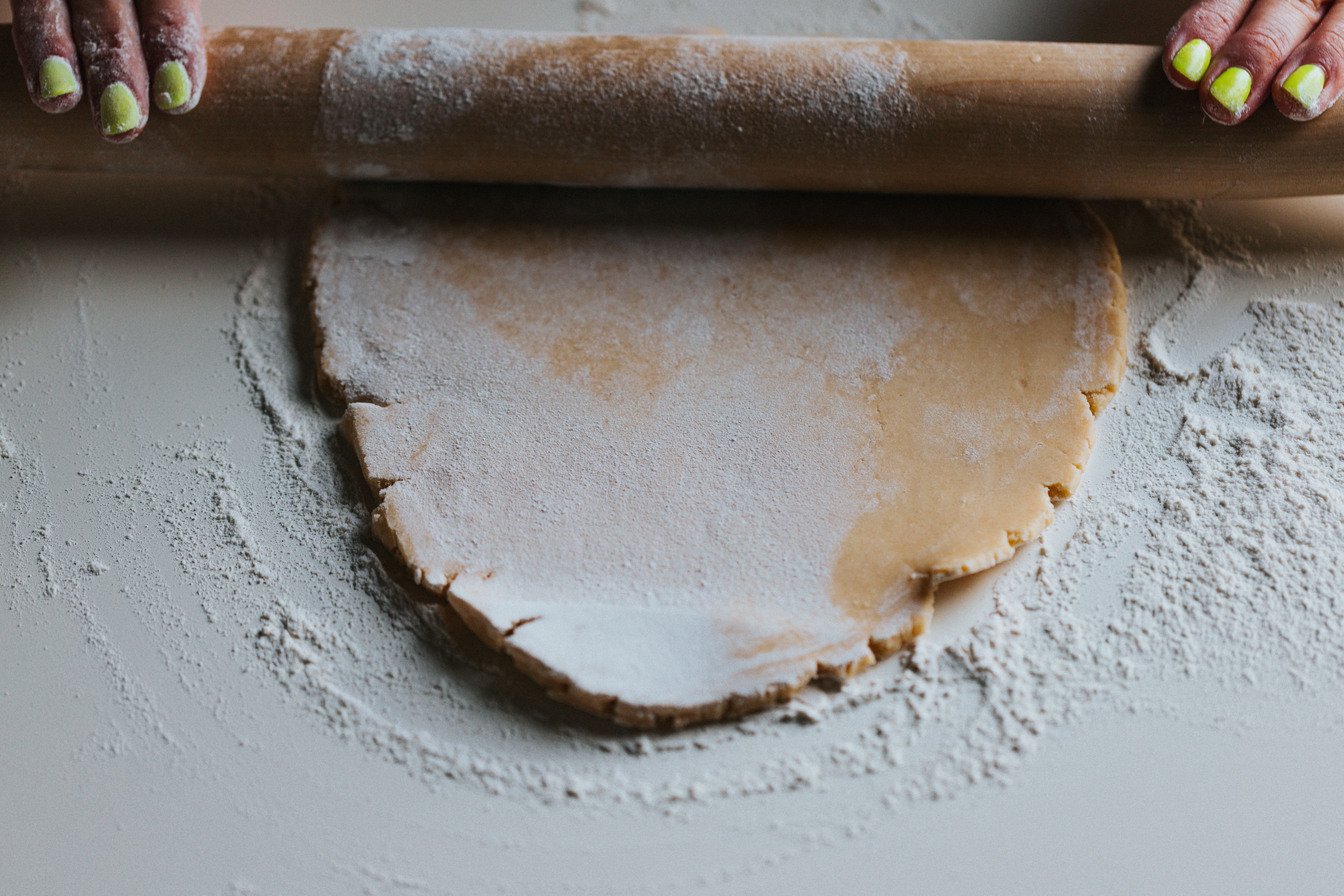
In the early years of my grief experience, I recall standing at the granite counter top with my hands deep in a bowl of dough. I was drinking red wine and rain was falling, I had jazz playing on my phone. It had been about six months since my dad passed, and I remember thinking to myself, whispering even, “I think I’m feeling happy again.”

It’s courageous to whisper these words.

Brene Brown reminds us of the risk of foreboding, how we have been trained by movies and culture, and sometimes life itself, to prepare for the next car crash, the next death, the next shoe to drop.

I also recall hearing that we, as humans, are bound to experience a major loss every seven years.

In a recent conversation with my mom, she nodded to that statement, and ticked off major life events that caused disruption in her life, every seven years or so. Was the truth there because she was noticing, or because we are bound to try to repeat our experiences in a flow that’s calculable?

I lost my grandmother six years and nine months after my dad passed. And we had a baby, disrupting my sense of calm and confidence I had worked so hard to cultivate since, just a few months before that. This year has been a blur.

And yet, once again, six months after the disruption, I found myself standing at a counter top in a new kitchen with my hands in a bowl of dough. I was dicing up butter and mixing flour and salt to make a pie crust. As I kneaded the mixture, I had jazz playing on my phone. Rain wasn’t hitting the skylights, but instead, a child cooed with her father on the floor. My child. My husband. The man who helped me to bring life into the world.

I dared again to whisper, “I think I’m feeling happy again.”

There are moments that shake us, shape us, and leave us wondering who we will be next. Like snakes, we step out of shed skin that’s no longer needed and move into bigger versions of ourselves. Do snakes feel pain in the shedding? I believe humans do.

In the transformation, the movement of days into nights, and turning of months into years, we have a brave choice to believe we can be happy again. The process takes a long time, and yet, the formula seems so simple.

Surround myself with people I love, with simple ingredients, with time to stand at the counter. I can focus on the next big disruption, or I can focus on the pie crust and what it will mean for a simple dinner at home.

I’m whispering “I think I’m happy again” and that is a beautiful thing.

When Weeping on Zoom …

I spent the weekend on Zoom for graduation from the Applied Compassion Training that I’ve been a part of since January. In closing ceremonies, we said good byes and cheered in recognition for work we have accomplished. For me, this involved the delivery of a Capstone Project designed to bring compassion to those with grief stories. I’ve found a way to formalize writing workshops to serve those who are hurting and I love the spaces I’ve been able to create for those to be seen.

Each of us graduates were given two minutes to share a few words about our experiences. I said this, “Graduation is always a good time to reflect on what brought us to this place. I want to go way back to the times my dad taught me to see other people. He modeled many ways we can choose to carry our pain. And he taught me that sensitivity and feeling in a callous world are strengths. Turning towards our pain is necessary to live a brave life. This program reminded me that turning towards suffering is always a courageous act. I’m thankful for the people who bravely say yes, rather than turn away. I move forward today, unsure of what’s next, but certain I will continue to say yes. Thank you for reminding me that the world IS good, even today.”

As I sat in my study this afternoon, surrounded by over 120 people dedicated to the pursuit of compassion across industries and around the world, I found myself swallowed by a grief wave. My people showed up on Zoom for the celebration, and as I clicked through the gallery of faces, I couldn’t help but notice who wasn’t there. You’d think I’d be used to his absence by now. But sometimes, the profound punches to the gut come from empty seats and vacant spaces on screen.

Tears filled my eyes and I turned off my camera and wept.

If he were still here, I wouldn’t have done any of this. And yet, I’ve filled the void with my words, with my aches, and I’ve extended the creation of space to explore our experiences using words.

The world is a mess when we focus on the crises. They exist every minute of every day. The fixing demands attention, hope, and possibility. And at the same time, brave, kind, caring humans are choosing to show up and say yes to doing something about our collective suffering.

What is good in your world right now? On my list are a surgeon’s steady hands, deliveries of flowers and meals for those in recovery, those who choose to wear masks to protect others, a refrigerator full of food, and the overflowing ways that my dad continues to influence my choice to look for good. Sensitivity is strength. Searching for good makes life more bearable. Compassion – the choice to act in the face of suffering – for ourselves and others, is a beautiful thing.

Hollowing

My grief gremlin lives in my heart pocket. If you’ve read my words for awhile, you might have heard me mention her. A tiny little creature, she has dark navy feathers and big, pleading eyes. She gnaws on tendrils of memories, connections, and fibers that once connected me to other people, places, and things. She nestles, tucking tiny wings in towards her body and pops up on anniversaries, on birthdays, and trips to the grocery store. She seems to have flourished during the pandemic, reminding me of her presence on ordinary days, and in the boring spans of hours filled with background noise and scrolling thumbs.

Today, she introduced me to a new friend.

One growing alongside her, in the cramped space of a worn pocket lined with soft flecks of lint.

She told me she’s cautious to name this new wonder growing, because it’s miniature size still needs nurturing. She’s dabbling with the name Hope. Or purpose. But naming feels scary because naming is claiming the reality that there’s space for anything else to take up residence in a sacred space that has been filled with prickles and dark for so long.

In a miraculous thread of connections, I found myself on a Zoom call with a woman from New York this morning. We are discussing a new project (stay tuned for more details) and as she shared her experience with me, in her pause, this sentence stuck with me.

It was a dark point in my life. I was hollowing out and letting go to make room for new things to rush in.

I nodded deeply to her wisdom.

How long have I been hollowing? The scooping and digging and scraping and saying good bye seems to be incessant.

What this woman’s story gave me, though, was the reminder of the spacious space inside me that has been emptied. I’ve been clinging desparately, pulling at torn edges, to bring the tapestry back together with the remnants of what was.

What is is no longer. Has the pandemic revealed anything clearer?

In my incessant thinking, and all the time alone in my study, I’ve forgotten how to welcome the rushing. I needed time to finger the losses, to wallow, to wait. I’ve accepted the pain and for fear of more, I’ve forgotten how to welcome.

My gremlin, in her nesting, has done a fabulous job of hollowing. Now she’s ready to welcome more into the space.

What will come rushing remains to be seen. Welcoming. What a beautiful thing.

To Want to Return

We inched slowly towards the ranger stand, waiting for our turn to be let in. After rolling down the window, we were asked if we had a reservation.

“We only want to head home on Trail Ridge Road,” Dylan explained.

The kind woman explained our options, having had missed the memo that we now needed a time slot to get into the national park thirty minutes from home.

We turned around again, driving back into the small mountain town to wait until they opened the road for the general public who forgot to reserve access.

The delay was an inconvenience, but survivable.

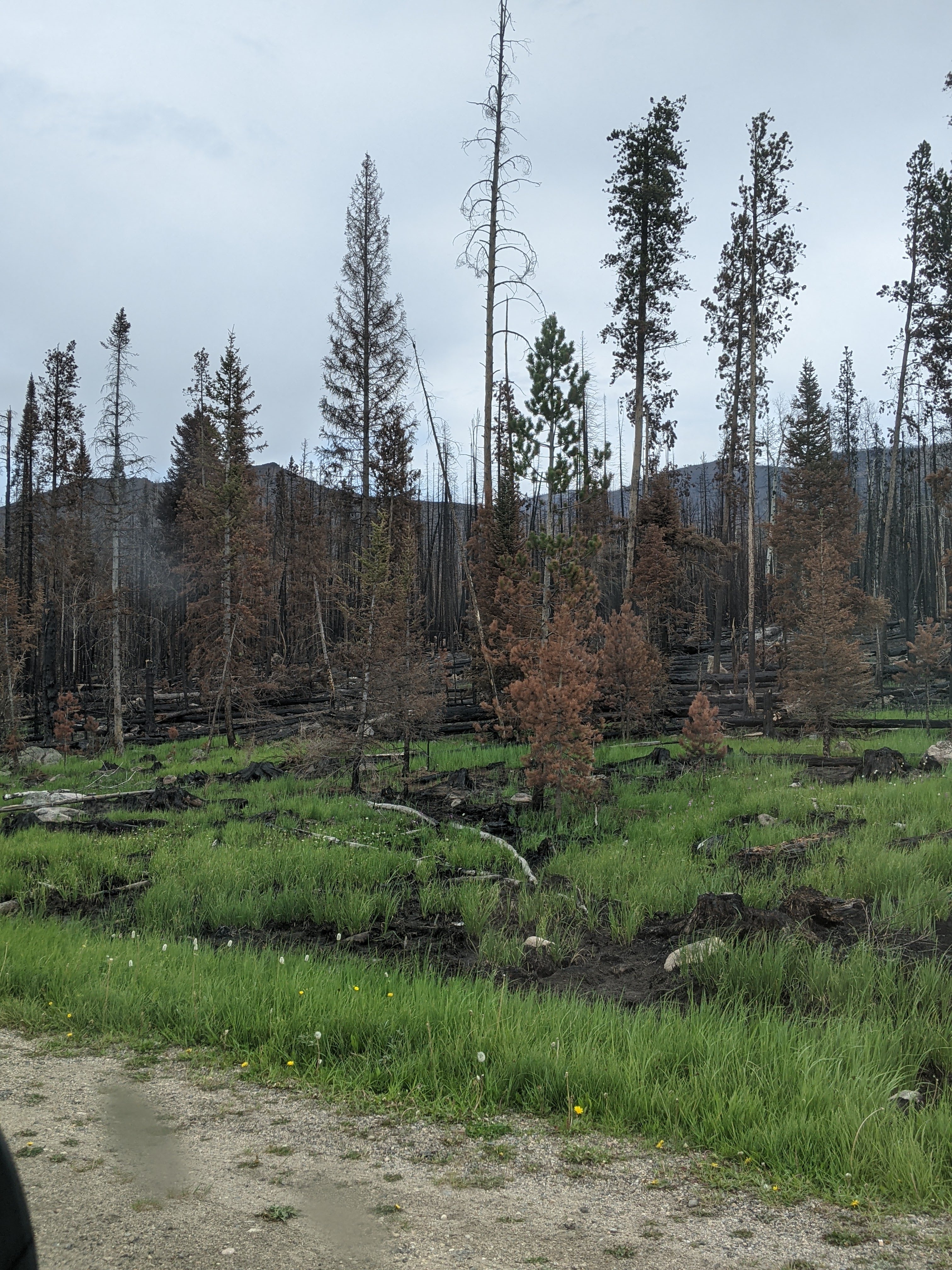
We drove to the nearby lodge, and passed the time on a deck overlooking a lake to the right. Behind us, whole valleys were scorched by the fires from last summer. Remnants of magnificent trees stood stabbing their charred limbs into blue skies. Pine trees turned burnt orange from heat clung to crisped aspens, bending from sheer desperation. I could imagine them gasping for air as flames licked up their homes, their friends, their communities.

I was witness to the damage we have done to the earth, even while sitting in my gas guzzling SUV. There’s something unsettling to see climate change in action. To know that the trees of my youth have burned and my someday children will come see scorched matriarchs nurturing tiny seedlings instead is heartbreaking.

Jaw dropping. Gasp worthy. We took in all that has been taken from us, from the earth, from our stories.

I’ve been in the holy space of standing on ash before. When what was crumbles and what will be remains smudged. Familiar paths now blocked, mixed with melted wires and wood wrecked and warbled from heat.

Eventually, the world calls us to stand, wipe the smears on our pants, and move on.

Our world is at an important crossroads right now. We’re getting on planes and hugging our friends and returning to offices. In other countries, the virus continues to ravage and take, burning connections and ripping up roots as it moves from host to host.

There’s a temptation to push what’s happened into the past. We’ve dealt with our smears. We’ve washed our hands of all of this. What grief has taught me, however, is no matter how far you go, your landscapes stay altered.

We can turn our attention to the saplings and new growth, and say, look at the greens poking through the char. But we must tend to the ache and say, ‘but please, please, remember all that has burned’.

I’ll come back to the park to watch it recover. I’ll stand among pines and listen to water gush and gurggle into streams. I’ll watch the elk and the deer find their sustenance in meadows another valley over. And putting a hand to my heart, I’ll remember picnics and meanders on paths, and all the places he had seen, now too, morphed by the natural cycles of loss.

To stand in a place that has been forever changed and want to return is resilience. What a beautiful thing.

Spice of Life

They opened up vaccine access to the general public in Colorado on April 2nd. Since then, I’ve been scouring vaccinespotter.org and the County website and I put myself on all the lists. I anxiously waited for the calls to hear, “It’s your turn.” I’ve been nagging my husband to do the same.

I received the email, I made an appointment and on Monday, when it was my turn to go, I started looking at other providers. I spent three hours ruminating in my head about which shot to get and if I could have a quicker recovery time and is a Friday a better day to receive a jab than a workday afternoon?

These questions persist when you live with anxiety. The pandemic pushed my cycling to chronic, and no, my rantings aren’t exactly beautiful. After texting a friend and my mom and cancelling and rescheduling and cancelling again, I decided to push my appointment to a later date. To live in a country where this is possible is privilege.

My momentary freak out was the culmination of thirteen months of fear. The vaccine feels like one more thing I’m clinging to as a possible way for things to go wrong, for the world to fall apart at my feet again. Dramatic, perhaps, but through a different lens, a very real reflection of what living life after loss looks like as I’m told the pandemic is coming to a close.

Still, cases climb. In some ways, I’m doubtful. Loss taught me life is fragile. The pandemic plunged me in to the dark pool again. A year in a home office has added a permanent hunch to my shoulders, forever closer to the computer screens where my interactions seem to live. I’m a part of conversations about re-entry, going back, and creating new ways of working daily. We’re eager for connection, for hugs, for trips to Hawaii. As I clicked “Schedule” to confirm my place in this incredible feat of human history, I felt the panic rising into my tense hips. My breath shortened. Is all of this really going to end?

While I wait for Friday, I look around my home. This space has been the backdrop for the work hours, the projects, the video watching, the dozens of books being read. The walls are a witness to boredom, my office chair a cushion absorbing the constant tension created from fear of losing someone else. White baseboards, now covered with dust, were tacked up with nails and caulk covering seams.

Repetition has seemed to strip the space of beauty. I’m so familiar with the contents of my refrigerator and the covering of dirt on the floor brought in by the dog that my eyes glaze over.

As I open the pantry, I notice I’m down to chili powder and onion powder and sprinkles of oregano ground to dust in the bottom of the jar. Variety, they say, is the spice of life. I feel some mix has been missing for quite some time.

In recent weeks, I started growing plants for the garden. The seedlings are small and sit in toilet paper beds of loose soil under red warming lights. Little green sprouts reach up and leaves are taking shape. In a few months, I’ll have more to work with. More flavor. Greenery. Flowers to place on the table.

For years I’ve wanted a tattoo that says, “This too shall pass.” The irony is clear – permanent ink for the truth that all of this comes to an end eventually. I’ve been craving the day when I can hug my brother or eat in a restaurant and suddenly, the light is streaming in. I’m not ready yet to say we’re past it. I wonder if this will be one of those experiences we carry on forever, marking what’s next a stamp of permanence into whatever waits around the bend.

I’m practicing compassion for the space in between. I honor the suffering for the scared girl inside of me and the hopeful woman dreaming of what could be. I’m turning inside to say to myself, “Yes, this has been scary. Yes, we don’t know. And you’re here. You’re ok. The people you love can be too. And look, the basil is growing.”

What a beautiful thing.

Not Much to Report

bank-phrom-Tzm3Oyu_6sk-unsplash

Photo courtesy of Unsplash

By the end of the week, it’s easy to ignore the nudging whisper my creative spirit sends to my fingers. “You haven’t used your powers,” she echoes, “to use your words for something other than emails.”

My energy gets absorbed into the little keys for things demanding attention all week long. Any extra, left-over effort wonders how to type or draft or craft to contribute during this time.  Many attempts to focus on the good feel aimless – like little helicopters that fall from maple leaves in autumn. I keep throwing the whirls into the air and they spin and spin. No matter how many times I throw them up, they fall and continue to land at my feet, just like last time.

Will the cadence of my pushing fingers stringing words together echo out beyond this tiny home office? Will one whirly-gig plant catch wind and travel beyond my back yard?

I didn’t write last week because I felt I had nothing much to report.

Writer Mari Andrew reminded me, in an Instagram featured interview, how lucky I am for this statement to be true. Nothing to report means my people are healthy, we’re employed, we’re spending our days on Zoom meetings and wondering when we can venture out.

Nothing to report means we’re a little bored.

What a privilege it is to be a little bored.

I take a deep breath and lion’s breath away the urge to type CNN.com into my browser because I know the world isn’t in such a state.

There’s too much to report.

Brave journalists continue to unpack the truth and challenge the lies or contradictions we’re being fed. Asinine politicians keep making horrific decisions leaving us every-day contributors in a constant state of worry.

Once again it feels a bit self-indulgent to be focusing on the small things, when the big things the world reports are so-damn-heavy.

With nothing to report here and lots to report out there, I wonder what chemical reaction can occur when we mix ordinary gratitude with catastrophic loss and the magnitude of complex decision making.

How will the flakes of salt I’ve sprinkled on home-grown tomatoes influence the healing of the sick, or change minds of stubborn folks stuck in their individualistic, out-dated methodologies? I’m not sure.

Can the aromatics of fresh pizza dough encourage billionaires to use their resources to alleviate suffering? Unlikely.

I do believe, however, when we choose to seek the beautiful, we raise the energy within our little spaces. When we lift the watering can once more or lick the chocolate from the spoon, we challenge the darkness with just a little bit of light.

Every decision we make has the ability to influence another; yes, even in this Groundhog Day like existence.

While the essential workers scrub and treat and heal and feed, I’ll muster a bit of battery juice into my tired fingers. We must remember to report the good.

The smell of crisp edges of a homemade waffle.

The crunch of hiking boots on a sandy mountain trail.

The smears of tears left on cheeks when it all feels like too much. THIS IS TOO MUCH.

A handprint left behind on a window wave.

A sunset captured in a smart phone camera.

Episodes of Downton Abbey previously unwatched.

Pages of cookbooks splattered with oil.

Laughter at inside jokes.

If we don’t report the good stuff, the bad stuff wins. If the extraordinary boring things go unnoticed, we give too much weight to the dark.

Go on … start a chemical reaction. Make some wind. Blow your good whirly-gig seeds all over the place.


If you believe in the pursuit of beautiful things, have ever come back from a set back in life, or hold firmly to the belief that we can all be kind to one another, invest in this on-going project.

If you like what you’ve read, please share the piece with a friend.

This is not ok.

katsia-jazwinska-ZIXIMHafhaE-unsplash

Photo by Katsia Jazwinska on Unsplash

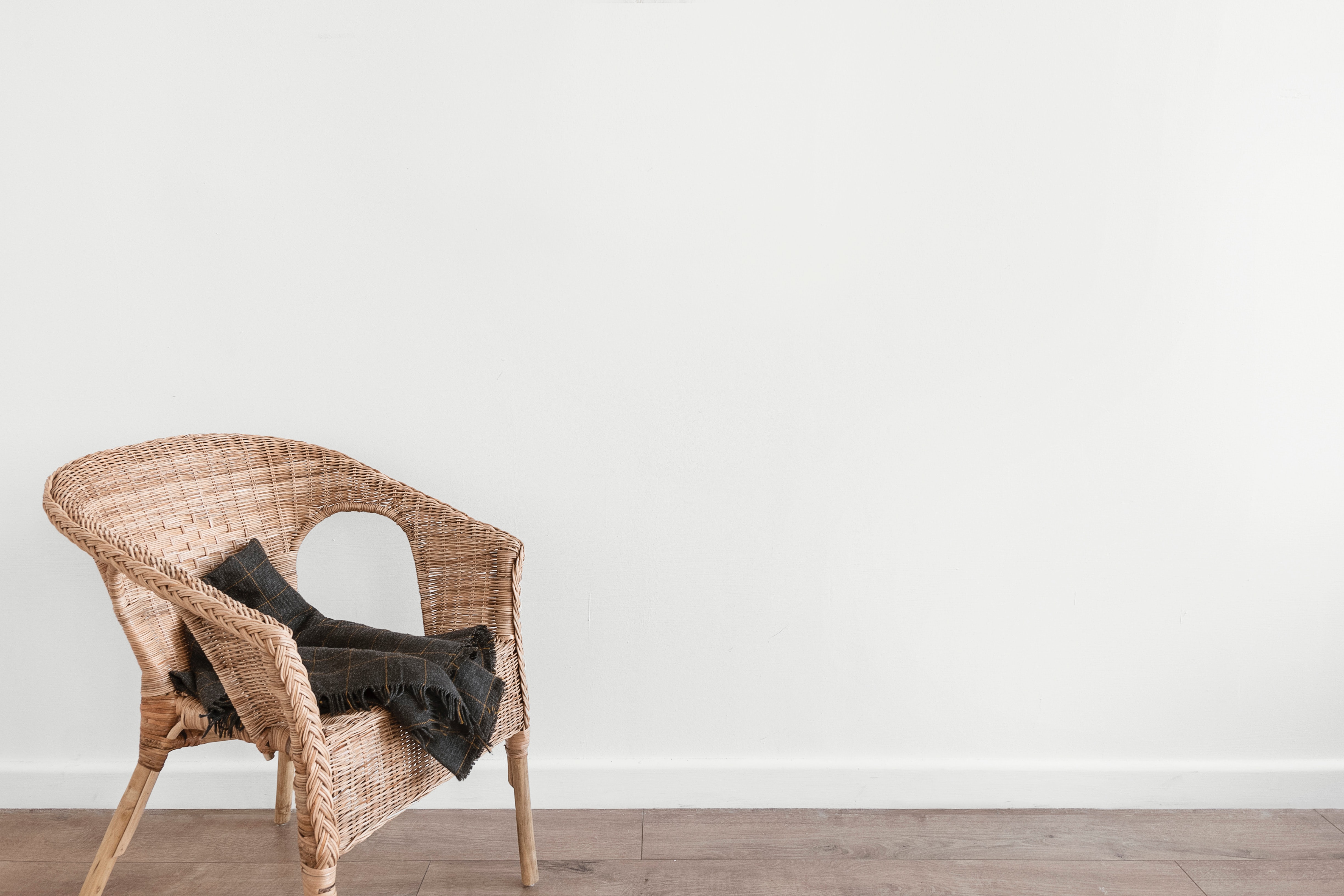
I remember standing at the high kitchen counter. My back was facing the big sliding door as the sun started to set and I was leaning against the worn wicker chair. My tear streamed face was turned down and I was looking at my fingers. 

“It’s going to be ok,” I kept saying to no one in particular.

My dad had died earlier that day and we had gathered in the kitchen as family started to show up.

“It’s going to be ok.”

At the time, my brain was spouting words of comfort while stuck in a spinning cycle of thoughts. I hadn’t gotten to the What-the-actual-F*** part yet. I was just trying to soothe the immediate blow.

There have been millions of posts about the world right now. Memes swish in cyberspace and hearts are broken on Facebook and with every It’s-going-to-be-ok sentiment exists a person leaning against chairs in the midst of confusion and swirling thoughts.

If you’re paying attention, your brain and your body are trying to self-soothe.

I don’t remember anyone responding to my five word phrase that day. No one was acknowledging my need to make things ok.

This was not ok. Someone I loved had died.

All over the world, people have died and their losses are broadcast on the news, turned into cautionary tales, used to make other folks terrified. Shame creeps in as the media lurks and warns and flashes as we silently pray, “Please not my people.”

In his book, Joe Biden estimates that for every person we lose, six people are intimately grieving that loss. The US lost over 20,000 people this month. Multiply that by six and realize the number of folks now plunged into grief. Add on the ones who already lost someone and the number of those impacted grows substantially. We’re triggered, we’re sad, we’re wondering and I’m hoping, staying the heck home.

This is not ok.

I’ve been at home for a month now. I know people who have gotten sick and my heart aches when I see posts of people who have died. No one is untouched by this experience.

I flashback to the kitchen and the white wicker bar stool and I whisper to my younger self, “No, this isn’t ok.”

I wish someone had said that to me.

This isn’t ok.

I’ve learned, in the last four years, when we call out the truth of our horrible experiences they lose the tight grips on our hearts and our worried brains.

There’s no going back.

I’m more compassionate to myself. I’m less tolerant of the things our world tells us are important. My molecules have rearranged and my perspectives have softened. I’m quicker to anger at injustice and ache for connection. Scars of loneliness get special attention and I type into the void with calm fingers wishing people could listen – all of our not-ok-ness is valid. We deserve a place to put our not ok stories.

This is not ok.

Let us weep and rest and extend grace to others as we make new choices from what remains. We will stand and move out of the rubble of the worlds we once knew. Donate money. Throw things safely.

Call out the not-ok-ness. I promise these four words are beautiful things.